Keeping your electric bike pumped and ready to ride is super important. A good bike pump makes it easy to inflate your tires quickly so you can hit the road without hassle. Whether you're commuting to work or going on a weekend adventure, having the right pump on hand ensures a smooth ride every time.
Bike Pumps & Inflators
Keep your tires in top shape with reliable bike pumps that make inflation a breeze
Product List
Types of Bike Pumps
Floor Pumps (Track Pumps)
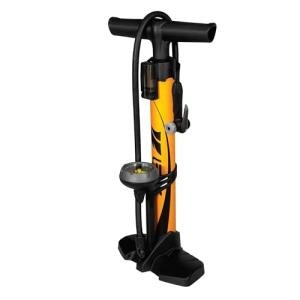
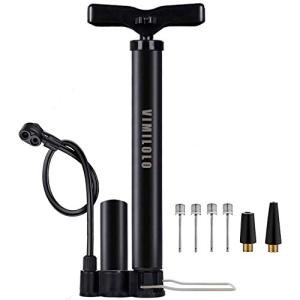
Floor pumps are the gold standard for home and shop inflation. They stand upright, allow you to use both hands and your body weight, and deliver high-volume, high-pressure air with minimal effort. A quality floor pump can fully inflate a road tire from flat in under a minute.
The best floor pumps feature a large barrel for faster air delivery, a wide stable base so they don't tip over mid-stroke, and a built-in pressure gauge that's easy to read. Many gauges are analog, though some newer models include digital readouts. The hose should be long enough to reach both wheels without moving the pump, and the head should lock securely onto the valve to prevent air leaks.
Floor pumps are not portable — they live in your garage, shed, or bike shop. If you're looking for something to take on rides, this isn't it. But as a primary inflation tool, nothing beats them for speed, accuracy, and ease of use.
Best for: Home use, pre-ride top-offs, workshop environments, any cyclist who inflates tires regularly.
Mini Hand Pumps (Frame Pumps)
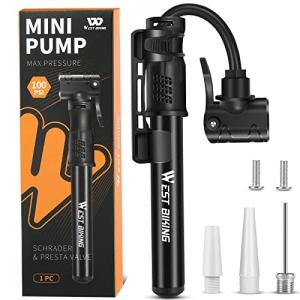
Mini pumps are the everyday carry option for cyclists who want to handle roadside flats without relying on anyone else. They're small enough to fit in a jersey pocket, saddle bag, or backpack, and they attach to most bike frames via a bracket or simply slip into a bag.
The trade-off with mini pumps is effort versus volume. Because the barrel is small, each stroke moves less air than a floor pump. Getting a road tire to 100 PSI with a mini pump takes real work — sometimes 100 or more strokes. That said, they're perfectly capable of getting you home. For mountain bike tires at lower pressures, they're much more manageable.
Look for mini pumps with a valve head that works without an adapter, a pressure gauge if possible (many compact models include one), and a durable body made from aluminum rather than plastic. Some mini pumps are designed to mount along the frame and double as a structural element — a clever design that saves bag space.
Best for: Emergency roadside inflation, commuters, cyclists who ride solo and want self-sufficiency.
CO2 Inflators
CO2 inflators are the fastest way to get back on the road after a flat. They work by releasing compressed carbon dioxide from a small cartridge directly into the tube. A standard 16-gram cartridge can fully inflate a road tire in under five seconds. For mountain bike tires, a 25-gram cartridge is often the better choice.
Speed is the main appeal. When you're mid-race, or it's cold and raining and you just want to be done, a CO2 inflator beats a hand pump by a wide margin. They're also incredibly compact — a cartridge and inflator head together weigh almost nothing.
The downsides: each cartridge is single-use. Once you've used it, it's gone. CO2 also migrates through rubber faster than air, so tires inflated with CO2 may lose pressure more quickly over the next few days. Smart cyclists carry CO2 for speed but keep a mini pump as a backup in case they have multiple flats.
When choosing a CO2 inflator, look for a controlled release valve so you don't dump the entire cartridge at once, thread-on compatibility with standard 16g cartridges, and an insulated grip — CO2 cartridges get extremely cold when releasing gas and can cause frostbite if held bare-handed.
Best for: Racers, cyclists who prioritize speed and minimal weight, anyone who's changed a flat in bad weather.
Tubeless Inflators and Compressors
The rise of tubeless tire setups — now standard on most mountain bikes and increasingly common on road and gravel bikes — has created demand for a specialized type of pump. Tubeless tires need a rapid burst of air to seat the bead against the rim, and a standard pump often can't deliver enough volume fast enough to make that happen.
Dedicated tubeless floor pumps solve this with a pressure chamber that builds up air, which is then released all at once for a powerful surge. This "blast" effect is usually enough to seat even stubborn tires without a compressor.
Portable tubeless inflators are also available, and some mini pumps include a tubeless mode. These are useful for re-seating a bead in the field if the tire burps air on a trail, though results vary.
Best for: Mountain bikers, gravel cyclists, anyone running tubeless tires.
Electric and Battery-Powered Inflators
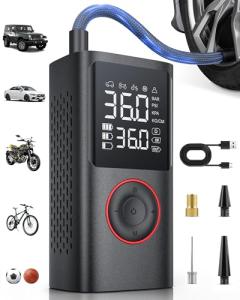
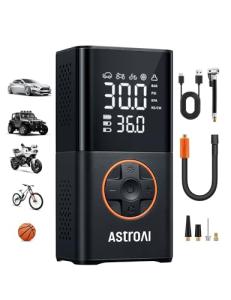
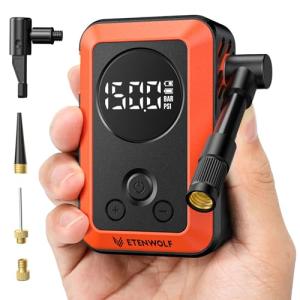
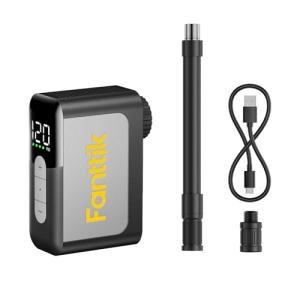
Compact electric inflators have improved dramatically over the past few years. Many now offer enough pressure output for road bike tires, automatic shutoff at a preset PSI, USB-C charging, and a built-in digital gauge. They're slower than CO2 but faster than hand pumping, and they require zero physical effort.
Electric inflators are popular with casual cyclists, people with mobility limitations, and anyone who just wants the most convenient option. The battery life is worth checking — cheaper models may struggle to inflate multiple tires before needing a recharge.
Best for: Casual riders, cyclists who inflate multiple bikes, anyone prioritizing convenience over weight savings.
Valve Types — Presta vs. Schrader
If you've ever bought a pump and found it doesn't fit your valve, you've encountered the Presta vs. Schrader divide. Understanding both is essential.
Schrader valves are the same as the ones on car tires — wider, with a spring-loaded pin in the center. They're common on mountain bikes, kids' bikes, and many entry-level road bikes.
Presta valves are narrower, with a threaded top that requires you to unscrew a small nut before inflating. They're standard on road bikes, higher-end mountain bikes, and most carbon rims. Before inflating, you must loosen that nut or air simply won't go in.
Most quality pumps today include a dual-head or switchable head that handles both. Budget pumps sometimes only handle one type, so check before you buy. Some pumps include interchangeable inserts rather than a dual-mode head — these work fine but are easier to lose.
A third valve type, Dunlop (also called Woods valve), is common in Europe and Asia on commuter bikes. It's rarely found in the US but worth knowing about if you ride imported bikes.
What to Look for in a Bike Pump
Pressure Rating (PSI / BAR)
Match your pump's maximum PSI to your tires' needs. Road tires need pumps rated to at least 120–160 PSI. Mountain and gravel tires don't need high pressure, but a higher-rated pump will give more consistent readings in the lower range.
Gauge Accuracy
A gauge is only useful if it's accurate. Cheaper gauges can be off by 10 PSI or more, which defeats the purpose. Analog gauges on quality floor pumps are generally reliable. Digital gauges offer precision but need batteries.
Head Type
The pump head is where most frustrations happen. Look for a secure, leak-free connection that doesn't require heroic effort to attach or remove. Heads that lock down via a lever mechanism tend to outperform push-on designs.
Hose Length and Flexibility
A hose that's too short forces you to move the pump mid-inflation. Too stiff and it's hard to work with. For floor pumps, 24 inches or more is ideal. A coiled or reinforced hose holds up better over time.
Build Quality
Aluminum barrels outlast plastic ones significantly. Metal valve heads are more durable than plastic. Check the base — welded steel or aluminum is more stable than a plastic foot ring. A pump that falls apart after six months isn't a deal.
Pump Accessories and Add-Ons
A few accessories can make your inflation setup more complete:
Valve adapters let you use a single pump across different valve types if your pump doesn't already handle both. Useful to keep in a saddle bag.
Pressure gauges (standalone) are useful for precise tubeless setups where you want to double-check your floor pump's reading. Also helpful for fine-tuning mountain bike sag alongside tire pressure.
Inflation needles and ball adapters turn any pump into a multi-sport tool, useful if you also inflate footballs, basketballs, or inflatable kayaks.
Replacement pump heads are available for most quality brands. If your head starts leaking, you don't always need a new pump — just a new head.
Choosing the Right Pump for Your Riding Style
- Road cyclists: Invest in a quality floor pump with an accurate high-pressure gauge. Carry CO2 for rides plus a mini pump as backup.
- Mountain bikers: A tubeless-capable floor pump for home, a larger-volume mini pump or CO2 for the trail. 25g cartridges for bigger tires.
- Commuters: A solid floor pump at home covers daily needs. A mini pump or electric inflator in your bag covers emergencies.
- Casual riders: An electric inflator or basic floor pump handles everything without complication.
- Competitive racers: CO2 for race days, a high-end floor pump for training, and nothing with a loose valve head.
Maintenance Tips to Extend Your Pump's Life
Even the best pump needs occasional attention. Check the valve head gasket periodically — a worn gasket is the most common cause of air leaks. Keep the barrel clean and dry to prevent corrosion, especially in humid climates. If the pump feels stiffer than usual, a drop of pump-specific lubricant on the plunger seal usually fixes it. Store floor pumps upright, off the floor if possible, to prevent moisture damage to the base.
Bike pumps are simple tools, but the right one makes every ride more reliable. Whether you're inflating before a century ride, seating a tubeless bead in the parking lot, or rescuing yourself from a flat twenty miles from home, having the right pump — properly matched to your valve type, tire pressure needs, and riding habits — is the kind of preparation that separates confident cyclists from frustrated ones.