The Range Anxiety Problem Is Over
There's a dirty little secret in the electric bike industry that nobody likes to talk about: most e-bikes lie about their range. Manufacturers throw around big numbers in optimistic lab conditions — light rider, perfectly flat roads, pedal-assist mode cranked to 1, zero wind. Real-world riders get half that, sometimes less.
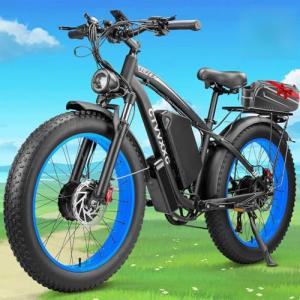
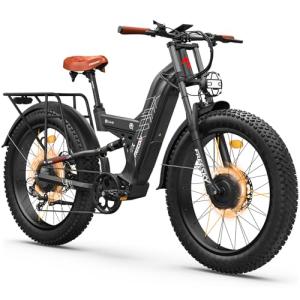
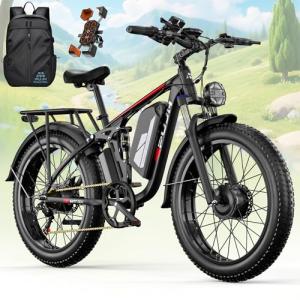
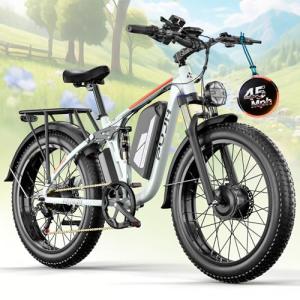
The FREESKY Alaska Pro was built as a direct answer to that problem. With a 48V 41Ah dual battery system delivering 2000Wh of total energy, it doesn't just pad its range figures — it structurally doubles down on capacity in a way that no single-battery competitor at this price point can match. That's 2.3 times farther than comparable single-battery e-bikes, and the math holds up in practice.
This is the e-bike for the rider who has been burned before. The one who bought a 750W commuter bike, watched the range estimates crumble on the first hilly ride, and vowed to do it right next time. The Alaska Pro is what "doing it right" looks like.
Who Makes FREESKY — And Should You Care?
Before dropping serious money on any e-bike, the brand behind it matters. FREESKY has more than 20 years of experience developing competitive products for electric bikes, with a focus on the intelligent integration of motors, batteries, and control systems with high-tech ergonomics. That's not a throwaway line — it explains why the Alaska Pro feels engineered rather than assembled. Details like the dual removable battery configuration, the FOC sinewave controller, and the 4-piston hydraulic brakes don't show up in budget builds. They show up when a company has spent two decades figuring out what actually matters on the road.
FREESKY operates warehouses in California and New Jersey, which means US customers get real logistics — not a months-long wait from an overseas fulfillment center. For a product this size and this price, that's meaningful.
Specification Breakdown: What You're Actually Getting
Let's cut through the marketing language and talk numbers.
The Alaska Pro M-520 runs on a dual battery system with a combined capacity of 48V 41Ah, offering a range of 90 to 160 miles. The configuration is split between an 18Ah upper battery and a 23Ah lower battery, both removable, which means you can charge them independently, swap them out at different rates, or carry a spare on ultra-long adventures without replacing the entire power system.
The motor peaks at 3000W and produces 160 N·m of climbing torque, capable of reaching 40 MPH with pedal assist or 20 MPH on throttle alone. The tires are 26×4.0 inches — wide enough to float over sand, grip through mud, and roll across snow without losing confidence.
The braking system deserves its own sentence: front and rear hydraulic 4-piston disc brakes provide effective stopping power on steep slopes, rugged terrain, and extreme conditions. That's motorcycle-grade stopping power on a bicycle chassis. At 40 MPH on a descent, you want 4-piston hydraulics. Period.
Full spec summary:
| Specification | FREESKY Alaska Pro |
|---|---|
| Motor (Peak) | 4000W |
| Motor (Continuous) | 3000W |
| Torque | 160 N·m |
| Top Speed | 40 MPH (PAS) / 20 MPH (Throttle) |
| Battery | 48V 41Ah Dual (18Ah + 23Ah) |
| Total Energy | 2000Wh |
| Range | 90–160+ miles |
| Tire Size | 26" × 4.0" Fat Tire |
| Suspension | Full (Front Hydraulic Fork + Rear Shock) |
| Brakes | 4-Piston Hydraulic Disc (Front & Rear) |
| Display | Color LCD with NFC Key |
| Lights | 800 LM LED Headlight, IP65 Waterproof |
| Riding Modes | 5 (Throttle, PAS, Cruise, Normal, Walk Assist) |
| Controller | FOC Sinewave (92% efficiency) |
| Battery Cycles | 5000+ |
| Certifications | UL 2849 (System) + UL 2271 (Battery) by TÜV |
| Certification Body | TÜV SÜD |
| Hill Climbing | 45° gradient |
The Dual Battery System: Engineering Meets Common Sense
The headline feature here isn't just capacity — it's the architecture. Most long-range e-bikes cram a single oversized pack into the frame and call it a day. FREESKY went a different direction with the Alaska Pro: two removable packs — 18Ah up top and 23Ah down low — deliver true day-trip range on PAS and cut downtime between charges.
Why does this matter? First, flexibility. If you're riding 30 miles round-trip to work, you don't need to lug both packs. Pull the lighter upper battery, leave the heavier one at home, and save a few pounds. Second, charging logistics. The removable batteries simplify charging and replacement, ensuring that riders can maintain their bike with minimal effort. You can charge inside your apartment while the bike stays locked in the garage. Third, longevity. An advanced smart BMS ensures 5000+ charge cycles — spread across two batteries that can be cycled independently, you're looking at a system that should outlast most riders' interest in ownership.
The batteries are UL 2271 certified, which is the gold standard for e-bike battery safety. That certification involves fire, vibration, shock, and environmental stress testing. It's not a marketing claim — it's a pass/fail technical standard conducted by a third-party lab.
Power You Can Actually Feel: The 4000W Motor
There's a tendency in e-bike marketing to throw watt figures around like they mean something without context. Here's the context: the Alaska Pro's motor delivers 160-mile range, 40MPH top speed, and 45° hill-climbing confidence from a single rear hub unit. That's the real-world translation of the specs.
The advanced FOC sinewave controller provides 92% energy efficiency and whisper-quiet operation. FOC — Field Oriented Control — is the same motor control technology used in electric vehicles and industrial drives. It eliminates the cogging and noise that plague cheaper square-wave controllers, and it's kinder to your battery because it doesn't waste energy as heat. The result is a motor that feels linear and responsive, not jerky and unpredictable.
The motor offers confident starts and hill surges without lag, and keeps momentum even with fat tires and a gear load. For riders carrying panniers, a rear rack load, or just their own body weight up a 15% grade, that last detail matters enormously. Fat tires create rolling resistance. Gear creates weight. The Alaska Pro's torque figure — 160 N·m — is what makes both irrelevant.
Suspension and Ride Quality: Built for the Real World
The Alaska Pro's suspension setup is one of its most underrated features. On paper, "full suspension" sounds like a checkbox. In practice, it's the difference between a bike you ride for fun and a bike you endure.
The FREESKY Alaska Pro uses a lockable and adjustable front hydraulic downhill fork and a rear shock absorber that significantly reduces unnecessary bumps during riding. The lockable front fork is especially practical for urban riding — lock it out on smooth pavement for efficient pedaling, unlock it when the road gets rough. It's the kind of tunable detail that separates purpose-built machines from general-purpose compromises.
The full suspension chassis smooths out chop, washboard surfaces, and curb impacts. For mixed-terrain riders who split time between city streets and dirt trails, that breadth of capability is exactly what you need from a single bike. The 26×4.0 fat tires contribute their own natural suspension effect — at lower pressures, they absorb trail texture without transmitting it to your wrists and spine.
One real-world rider noted: "It fits me perfectly at 6'2" and rides smoothly. I went 42 miles on PAS 3-5 and still had 67% battery left." That's not a curated testimonial — that's the battery math working as advertised.
Safety Certifications: What UL 2849 by TÜV Actually Means
The FREESKY Alaska Pro carries two distinct safety certifications, and it's worth understanding what they cover because the e-bike market is full of uncertified products that hide behind vague safety language.
UL 2849 covers the entire e-bike system — motor, controller, wiring, and the interaction between components. It tests for electrical shock, fire, and mechanical failure at the system level. Most brands only certify the battery. Getting the full bike certified by a third party is a significantly higher standard.
UL 2271 covers the battery pack specifically, and it's the certification that e-bike fires have historically been about. It tests cells and battery management systems under crush, short circuit, overcharge, high temperature, and water immersion conditions.
Both certifications on the Alaska Pro were awarded by TÜV SÜD — one of the world's most rigorous independent testing organizations, headquartered in Germany, with no commercial relationship to FREESKY. When TÜV SÜD stamps a certification, it carries real weight. Many competing e-bikes at this price point carry no third-party certification at all, or carry certifications from lesser-known bodies with weaker standards.
For apartment dwellers charging indoors, for families with children nearby, and for anyone parking their bike in a building — these certifications aren't optional extras. They're the foundation of responsible ownership.
Five Riding Modes: One Bike, Many Purposes
The Alaska Pro offers five customizable riding modes: Throttle, PAS (Pedal Assist System), Cruise, Normal, and Walk Assist.
Throttle mode puts full motor control at your thumb — useful for navigating slow traffic, launching from a stop, or tackling steep sections where you'd rather let the motor do the work without pedaling.
PAS mode gives you five levels of pedal assistance. Lower levels extend range dramatically while still providing meaningful support on climbs. Upper levels turn the bike into a full-power machine where pedaling is more symbolic than mechanical.
Cruise mode maintains a set speed without requiring constant throttle input — a genuine comfort feature on long flat stretches where hand fatigue becomes a real concern after an hour in the saddle.
Walk Assist is the underappreciated mode that every heavy e-bike should have. At roughly 98 lbs, the Alaska Pro is not something you want to muscle through a tight space or up a flight of stairs. Walk Assist engages the motor at walking pace, letting you guide the bike rather than haul it.
The color LCD display shows 5 PAS levels, headlight status, speed, battery life, and mileage at a glance, while the NFC key system provides theft deterrence that goes beyond a simple lock. Lose the physical key? Your phone becomes the key. It's a small detail that reflects the kind of integrated thinking that distinguishes a well-developed product from a spec sheet assembled backwards.
Competitor Comparison: How the Alaska Pro Stacks Up
The e-bike market at the $1,500–$2,000 price point is crowded. Here's how the Alaska Pro compares to three of the most commonly cross-shopped alternatives:
| Feature | FREESKY Alaska Pro | Himiway Cruiser | RadRover 6 Plus | Lectric XPeak |
|---|---|---|---|---|
| Motor (Peak) | 4000W | 750W | 750W | 1310W |
| Top Speed | 40 MPH | 20 MPH | 20 MPH | 28 MPH |
| Battery Capacity | 48V 41Ah (Dual) | 48V 17.5Ah | 48V 14Ah | 48V 19.2Ah |
| Total Energy | 2000Wh | 840Wh | 672Wh | 922Wh |
| Claimed Range | 90–160 miles | Up to 60 miles | Up to 45 miles | Up to 65 miles |
| Suspension | Full (Front + Rear) | Front Only | Front Only | Full (Front + Rear) |
| Brakes | 4-Piston Hydraulic | Mechanical Disc | Hydraulic Disc | Hydraulic Disc |
| Tire Size | 26" × 4.0" | 26" × 4.0" | 26" × 4.0" | 24" × 4.0" |
| Safety Cert | UL 2849 + UL 2271 (TÜV) | UL 2271 | UL 2271 | UL 2849 + UL 2271 |
| NFC Key | Yes | No | No | No |
| Walk Assist | Yes | No | Yes | Yes |
| Approx. Price | ~$1,699 | ~$1,599 | ~$1,799 | ~$1,299 |
The numbers tell a clear story. The Himiway Cruiser, with its 750W motor and up to 60-mile range, falls short when compared to the Alaska Pro's combination of power, range, and versatility. The RadRover 6 Plus is a polished, well-supported bike from a household name, but its 672Wh battery is less than a third of the Alaska Pro's capacity. The Lectric XPeak comes closest on price and certification, but its single battery and lower motor output put it in a different performance category entirely.
The Alaska Pro's 4-piston hydraulic brakes are the clearest differentiator at this price. Hydraulic stoppers with four-piston calipers inspire confidence at higher speeds — and at 40 MPH, that confidence is not optional.
Real-World Use Cases: Who Should Buy This Bike?
Long-distance commuters. If your daily round trip exceeds 30 miles and includes any elevation change, the Alaska Pro makes single-charge commuting genuinely viable in a way that 500Wh bikes simply don't. The dual battery system means you're not recalculating your route based on remaining charge every morning.
Adventure and trail riders. For those who enjoy exploring rugged trails, snow-covered paths, or sandy beaches, the Alaska Pro's powerful motor and fat tires make it a reliable companion for off-road adventures. The full suspension and 160 N·m of torque make technical terrain approachable for riders who aren't mountain biking specialists.
Rural riders. In areas where charging infrastructure is sparse and distances are real, the 160-mile range ceiling isn't a theoretical luxury — it's a practical necessity. The Alaska Pro was built for riders who can't afford to run out of power 40 miles from home.
Fitness riders who want range. The five-level PAS system means you can dial in exactly how much assistance you want. Ride at PAS 1 for a genuine workout, switch to PAS 3 for a comfortable cruise, and tap PAS 5 when you're tired and just need to get home. The same bike serves all three purposes without compromise.
What to Know Before You Buy
A few practical notes that any honest review should include:
Weight. At approximately 98 lbs, the Alaska Pro is not a bike you'll carry up three flights of stairs without planning for it. The Walk Assist mode helps at street level, but upstairs storage in a small apartment requires either a ground-floor option or a dedicated lifting strategy.
Charging time. A full charge takes approximately 6–7 hours with the included charger. With two removable batteries, you can charge both simultaneously with a second charger (sold separately), cutting total downtime in half. Power users should budget for that second charger early.
Legal speed considerations. The 40 MPH top speed is achievable but legally restricted in most US jurisdictions for road-legal operation. Most states classify e-bikes by speed class. Know your local regulations before unlocking higher speeds, and ride accordingly on shared paths.
Assembly. The Alaska Pro is designed for easy assembly, with a detailed instruction manual and tools included in the package. Most riders report completing assembly in under an hour. If you're not mechanically confident, a local bike shop will typically charge $50–$75 for assembly services.
A Category-Defining E-Bike Under $2,000
The FREESKY Alaska Pro is a long-range all-terrain workhorse. That's not marketing copy — it's the most accurate description of what this bike actually is. The 48V 41Ah dual battery system, the 4000W peak motor, the 4-piston hydraulic brakes, the full suspension chassis, and the TÜV-verified safety certifications are not features assembled to hit a price point. They're the components of a coherent design philosophy: build one bike that genuinely goes far, genuinely goes fast, and genuinely handles whatever terrain you throw at it.
The FREESKY Alaska Pro has earned a 4.6 out of 5-star rating from customers, with riders praising its long range, powerful motor, and smooth suspension system.
At its price point, no competing bike matches the Alaska Pro's combination of capacity, power, suspension quality, and third-party safety certification. Some bikes are cheaper. Some are lighter. Some have more brand recognition. None of them bring 2000Wh of dual removable battery capacity, 4-piston hydraulics, and a full-suspension chassis together under the same frame at this cost.
For serious riders who are done compromising — on range, on power, or on safety — the FREESKY Alaska Pro is the answer the market needed.
→ Check current pricing and availability on Amazon
Specifications are based on manufacturer data and third-party testing. Real-world range varies based on rider weight, terrain, temperature, and riding mode. Always verify local regulations before operating at speeds above 20 MPH on public roads or shared paths.